기업과 조직의 의사결정, 사람들의 업무와 경력 변화를 가까이에서 접한 경험을 바탕으로, 국가와 사회를 이해하는 데 필요한 내용을 독서와 실제 대화에 연결하는 저술에 관심을 두고 있다. 특히 다른 문화권의 사람과 교류할 때에는 익숙한 이름이나 일반적인 인상만을 내세우기보다 사실과 배경을 확인하고, 같은 인물을 서로 다르게 기억할 수 있다는 점을 이해하는 태도에 주목한다.
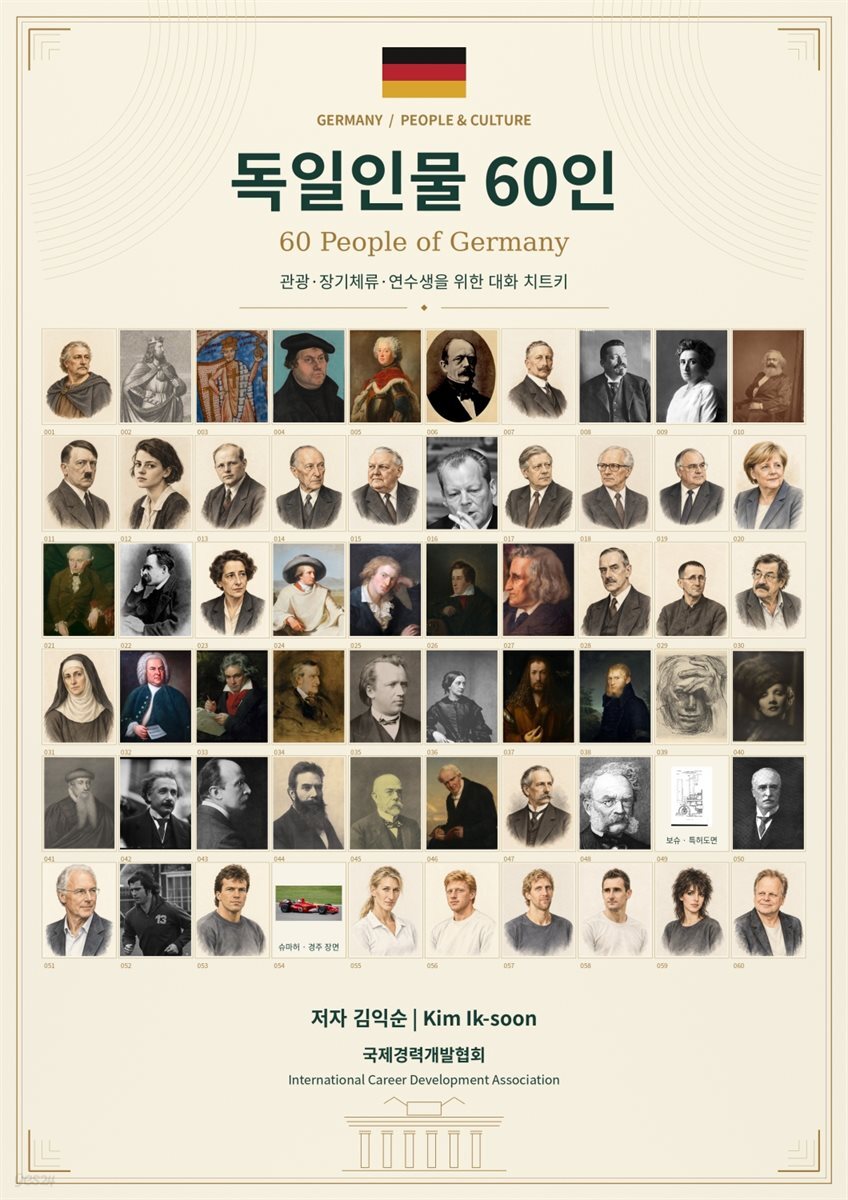
『독일인물 60인』에서는 독일의 역사와 문화를 하나의 국가적 성공담으로 정리하지 않고, 오랜 시간에 걸쳐 서로 다른 지역과 제도 안에서 활동한 인물들의 선택으로 살펴본다. 카롤루스 대제와 신성로마제국의 군주, 프로이센과 독일 통일의 정치인을 거쳐 독재와 저항, 분단과 통일의 인물을 다룬다. 동시에 칸트와 니체, 아렌트, 괴테와 그림 형제의 사상·문학·언어, 바흐와 베토벤·클라라 슈만의 음악, 미술과 영화, 과학과 산업, 스포츠와 대중음악을 함께 읽는다. 오늘날 독일을 이해하려면 고전적 문화유산뿐 아니라 전쟁과 분단, 노동과 기술, 개인의 자유와 사회적 책임에 관한 서로 다른 기억도 살펴야 한다는 구성을 취한다.
특히 한 인물의 공적을 인정하는 일과 그가 남긴 피해·한계를 살피는 일이 서로 배타적이지 않다는 점에 관심을 기울였다. 중세 왕의 정복을 후대의 독일 국가 건설과 구별하고, 종교개혁가의 언어적 영향과 반유대주의 저술을 함께 살피며, 나치 독재의 책임과 시민 저항의 실제 활동을 구분한다. 전후 서독의 사회적 시장경제와 외교, 동서독의 분단을 설명할 때에도 정부 지도자 한 사람만이 아니라 의회와 노동자, 다른 국가와 시민의 역할을 함께 놓는다. 철학과 예술의 작품, 발명과 스포츠의 성취 역시 역사 기록과 기념의 차이를 확인하며 읽도록 구성하였다. 이는 상대에게 특정 해석을 강요하기보다 근거를 바탕으로 대화를 넓히려는 접근이다.
전체 6부·12장·60개 인물 편은 독일을 여행하거나 장기체류·연수·업무 교류를 계획하는 독자가 여러 상황에서 만나는 이름과 이야기를 연결하도록 마련되었다. 각 편에는 인물의 사진·초상 또는 관련 자료, 출생 정보와 한영 핵심 문장, 영어 인포그래픽, 문단별로 대응하는 한국어와 영어 설명, 열린 대화 질문, 참고자료가 담겼다. 저자는 독자가 주요 사건과 작품을 단순히 외우기보다 그것이 생겨난 조건을 설명하고, 독일 사람과 대화할 때 상대가 무엇을 알고 어떻게 기억하는지 물어볼 수 있기를 기대한다. 사람의 삶을 통해 역사·예술·기술·스포츠를 가로질러 읽는 방식이 국가 간 교류에서 더 구체적이고 존중하는 질문을 만드는 데 기여하고자 한다.
주요 이력 및 저서
기업 전략기획·인사·경영지원·교육·컨설팅 분야 활동
『인물과 사건으로 읽는 한국 독립운동 300』
The author worked in strategic planning and human resources in the Human Resources Team of the Corporate Strategic Planning Division at Samsung Electronics headquarters. Kim also served as a management support executive at a foreign-owned manufacturing company and gained experience founding and running a business. These roles provided broad insight into organizational management, talent development, workplace communication, education, and career development. Drawing on experience of organizational decisions and changes in people’s work and careers, Kim is interested in writing that connects knowledge of countries and societies with reading and actual conversation. In cross-cultural exchange, the focus is on checking facts and context rather than relying on familiar names or general impressions, while recognizing that people may remember the same figure differently.
In 60 People of Germany, German history and culture are not reduced to a single narrative of national success. Instead, the book examines decisions made by people active in different regions and institutions over a long period. It moves from Charlemagne and rulers of the Holy Roman Empire to Prussian and unification-era politicians, then to figures connected with dictatorship, resistance, division, and reunification. It also brings together the ideas, literature, and language studies of Kant, Nietzsche, Arendt, Goethe, and the Brothers Grimm; the music of Bach, Beethoven, and Clara Schumann; and figures from art, film, science, industry, sport, and popular music. Its organization reflects the view that understanding Germany requires attention not only to classical cultural heritage but also to different memories of war, division, labor, technology, individual liberty, and social responsibility.
The writing pays particular attention to the fact that recognizing a person’s achievements need not exclude examining the harm or limitations associated with them. Medieval conquests are distinguished from later German nation-building; the linguistic influence of a Reformation figure is considered alongside anti-Jewish writings; and responsibility for Nazi dictatorship is separated from the documented work of civic resisters. In discussing West Germany’s postwar social market economy and diplomacy, as well as the division between East and West, the book considers the roles of parliaments, workers, citizens, and other countries rather than crediting a single leader. Philosophical and artistic works, inventions, and sporting achievements are also read with attention to the distinction between surviving records and later commemoration. The approach seeks to expand conversation based on evidence rather than require agreement with a particular interpretation.
The sixty profiles in six parts and twelve chapters are designed to connect names and stories readers may encounter while traveling, residing for an extended period, undertaking training, or engaging in professional exchange in Germany. Each profile contains a photograph, portrait, or related source, birth information and a Korean?English key statement, an English infographic, corresponding Korean and English explanatory paragraphs, open-ended questions, and references. The author hopes readers will do more than memorize major events and works: they may explain the conditions in which these emerged and ask German counterparts what they know and remember. Reading across history, art, technology, and sport through individual lives is intended to encourage more specific and respectful questions in international exchange.
Career Highlights and Selected Books
Current President, International Career Development Association
Former member, Human Resources Team, Corporate Strategic Planning Division, Samsung Electronics headquarters
Experience in corporate strategic planning, human resources, management support, education, and consulting
『인물과 사건으로 읽는 한국 독립운동 300』